
Grief Doesn't Have an Expiration Date.
I work with adults in New York and New Jersey who are in the middle of grief — wherever you are in it. If you've been carrying this longer than you think you should, or if everyone around you seems to have moved on when you haven't, this is the right place.
Book a Free Consultation One connection can change everything.Grief Doesn't Always Look the Way People Think It Will.
People say grief gets easier with time. Sometimes it does. But sometimes you're a year out and still not sleeping right. Still avoiding certain songs, certain roads, certain conversations. Still replaying things you did or didn't say.
Grief doesn't always look like crying. Sometimes it looks like going numb. Like being fine at work and then falling apart in the car. Like missing someone so much it changes the way you move through rooms. Like losing a relationship — or a version of your life you worked for — and not quite knowing who you are now that it's gone.
The loss of someone you loved — a parent, a partner, a friend, a child
A relationship ending that still doesn't feel real
Grief that resurfaces months or years after the loss
The quiet weight of watching someone decline before losing them
Loss that no one around you seems to understand or make room for
What Happens When Grief Goes Unaddressed
Unprocessed grief doesn't disappear. It tends to settle in — quietly affecting sleep, appetite, focus, and the way you show up in relationships. It can make even small things feel like too much, or make you feel disconnected from a life that looks fine from the outside.
The longer it goes without a real space to be worked through, the harder it gets to know what's grief and what's just… you.
That's not a permanent truth. But it can start to feel like one.
You don't have to accept that as your answer.
Grief Is Not a Problem to Be Fixed.
It's something to be moved through — with the right support, at the right pace.
Advanced Certification in Grief & Loss
Dianne holds an advanced certification in grief and loss — not as a side specialty, but as the center of her practice. Sessions aren't built around stages or timelines. We start with where you are.
When Grief and Trauma Are Layered
When grief and trauma are woven together, Hamilton Psychotherapy offers Attachment-Focused EMDR (AF-EMDR) — an approach that works with the nervous system rather than requiring you to relive what happened.
Women's Grief Support Group
For those drawn to working through loss alongside others, there's an 8-week virtual Women's Grief Support Group — Tuesdays, 7:15–8:30pm ET, at $75 per session.
Fully Via Telehealth
We work with clients across New York and New Jersey — no commute, no waiting room. Just a real conversation wherever you are, at a time that works for your life.
This isn't cookie-cutter advice or checking boxes. It's real support that fits your life.

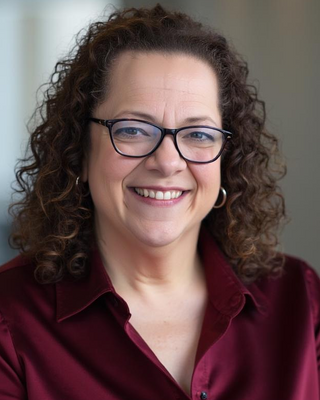
I'm Dianne Galasso, LCSW.
I founded Hamilton Psychotherapy after leaving a hospital position to build something different — a practice where the work is real and the support is actually personal.
Grief is where I've focused the deepest training of my career. I hold an advanced certification in grief and loss — and beyond the credentials, I came to this work through my own experience with major life upheaval. That shapes how I listen and how I work. When grief and trauma are layered together, Hamilton Psychotherapy is equipped to address both, including through Attachment-Focused EMDR (AF-EMDR).
I've sat across from people who are a few weeks out from a loss and people who are years out and still stuck. Both are completely valid times to reach out for support. You don't have to have it figured out before you do.
Book a Free ConsultationGrief Work Is Its Own Discipline.
Specialized, Not Generalist
Dianne holds an advanced certification in grief and loss — formal training that goes beyond general practice. Grief has its own rhythms, its own complications, and its own way of not following the rules. This practice is built around understanding that.
Small by Design
Hamilton Psychotherapy keeps a deliberately limited caseload. That means your therapist actually knows you — your history, your pace, what's shifted, and what hasn't. Not just what was in your intake form.
Community Beyond 1:1
For those who want to work through loss alongside others who genuinely understand, there's an 8-week Women's Grief Support Group running virtually on Tuesday evenings. Individual and community support, available at the same practice.
What Grief Counseling Actually Looks Like
No scripts, no checklists. Sessions are shaped around you.
The First Session
The first session is mostly a conversation. I want to understand what brought you here and the ways you're hoping to feel differently. We won't rush anything.
Your Pace, Your Terms
Sessions are shaped by you — what's coming up, what you're ready to look at, what you need in any given week. Some people work through a specific loss. Others are untangling grief that's built up over time. Unique support tailored specifically to your needs.
Telehealth, Wherever You Are
I work fully via telehealth, which means we can meet wherever you are in New York or New Jersey — no commute on top of everything else. Most clients meet weekly at first, then adjust as things shift.
Three Simple Steps
Getting help doesn't have to be complicated. Here's how it works.
Book a Free 15-Minute Call
No commitment, no pressure. Just a short conversation to see if working together makes sense. If it feels right, we'll schedule your first session.
Start Working Through It
We meet via telehealth — wherever you are in New York or New Jersey — and begin the real work. At your pace, on your terms. No script.
Find Your Footing Again
The goal isn't to be "over it." It's to carry it differently — with more steadiness, more clarity, and a better sense of who you are on the other side.
Things People Usually Ask
There's no right timeline. Some people start in the acute early weeks. Others come in a year or two later, when they realize they haven't been able to move through it on their own. Both are completely valid starting points. Where you are is the right place to begin.
Yes. Grief doesn't always have a clear shape. Sometimes it's the loss of a person. Sometimes it's a relationship, a version of your life, a future you planned for. If something feels heavy and you don't have words for it yet, that's exactly the kind of thing therapy can help you understand.
Grief rarely travels alone. Anxiety, trauma symptoms, and depression are common companions. Hamilton Psychotherapy is equipped to work with all of it — including Attachment-Focused EMDR when trauma and loss are layered together. We'll address what actually comes up in the room.
It's a virtual 8-week group for women working through loss alongside others who genuinely get it. It meets on Tuesdays from 7:15 to 8:30pm ET at $75 per session. If you're interested, just mention it when you reach out and I'll share current availability.
AF-EMDR (Attachment-Focused EMDR) is a specialized approach to processing trauma that works with how your nervous system holds difficult experiences — without requiring you to recount everything in detail. It's available at Hamilton Psychotherapy for clients whose grief and trauma are layered together. Not everyone needs it, and it's never something we'd jump into — we'd talk through whether it makes sense for your specific situation first.
If you've been wondering whether what you're going through "qualifies" for therapy, that question itself is usually a good enough reason to reach out. Therapy isn't reserved for crisis — it's for anyone who wants to understand themselves better, process something that's been lingering, or find support they haven't been able to find elsewhere. A free 15-minute consultation is a no-commitment way to find out if this feels like the right fit.
I'm a private pay practice — sessions are paid out of pocket at the time of service. I don't bill insurance directly. If you have out-of-network benefits through your plan, you may be able to seek reimbursement on your own. I'll send you the billing codes you can submit to your insurance — including code 90834 for individual therapy sessions. I'd encourage you to check with your insurance provider about how that works.
It's a video session on a HIPAA compliant platform, similar to a Zoom call. You can join from home, your car, wherever you have some privacy. Most people are surprised by how natural it feels. All you need is a phone, tablet, or computer with a decent internet connection.
You Don't Have to Keep Carrying This Alone.
Grief is heavy enough without figuring it out by yourself. A free 15-minute call is a low-stakes way to find out if we're a good fit. No pressure, no commitment — just a real conversation.
Book a Free Consultation One connection can change everything.